

Market Qualification for Medtech R&D
Before IQ, OQ, and PQ, did you qualify the market?
Most medical devices pass validation and still struggle in adoption. TCX helps medtech R&D teams identify workflow friction, behavioral resistance, and real-world barriers before launch.
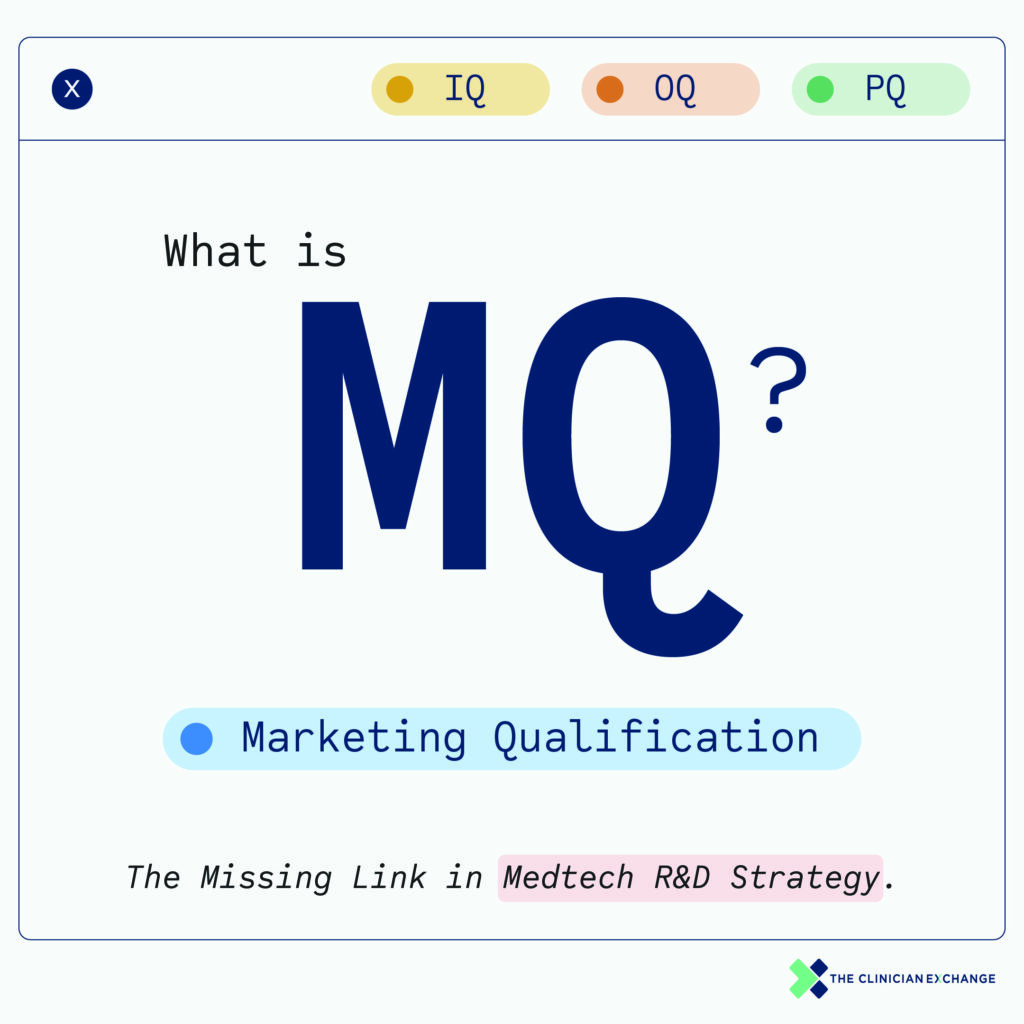
What Is Market Qualification in Medical Devices?
Market Qualification, or MQ, is the process of validating whether clinicians will actually use, adopt, and integrate a medical device into real-world workflows.
Unlike IQ, OQ, and PQ, which validate product performance, MQ validates market behavior, workflow fit, and adoption risk before launch.
Why Medical Devices Fail After IQ, OQ, and PQ
Medical device validation follows a clear path. Installation Qualification confirms the system is installed correctly. Operational Qualification confirms the product performs as intended. Performance
Qualification confirms the product delivers consistent results.
But none of these answer one critical question. Will the market actually use the product this way?
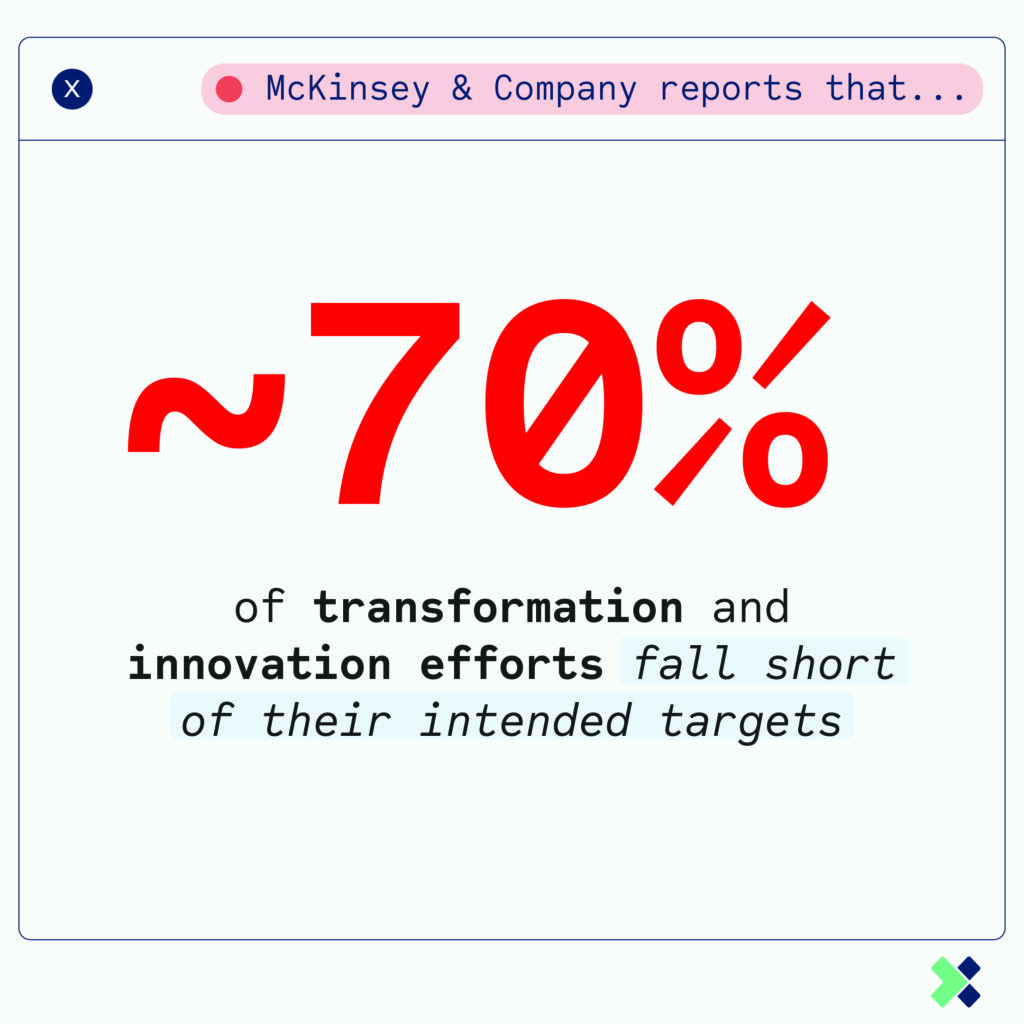
Approximately 70% of transformation and innovation efforts fall short of their intended outcomes. Not because the product fails. Because adoption never happens the way teams expect.
What Is the Difference Between IQ, OQ, PQ, and Market Qualification?
IQ, OQ, and PQ
IQ, OQ, and PQ validate the product.
Market Qualification
Market Qualification validates the environment the product enters.
IQ, OQ, and PQ answer the question: does it work?
Market Qualification answers a different set of questions. Will clinicians actually use it this way? Does it fit into existing workflows? Will systems support adoption? Is the operational burden worth the value?
Where Medtech R&D Teams Get Caught Off Guard
Many teams rely on internal assumptions, limited user feedback, or input filtered through commercial teams. Those inputs can directionally help, but they rarely reflect real-world clinical behavior.
This gap shows up after launch. Adoption is slower than expected. Feedback from the field is inconsistent. Clinicians resist in ways R&D teams did not anticipate. The product performs, but the workflow breaks.
Start Your Market Qualification SnapshotHow Market Qualification Reduces Adoption Risk
Products developed with strong user input are up to two times more likely to succeed. Market Qualification introduces real-world insight early, when changes are still actionable.
Instead of validating performance alone, Market Qualification evaluates whether the product will function within the reality of clinical workflows and user behavior.
How TCX Executes Market Qualification
Voice of Customer engagement
Voice of Customer engagement captures direct clinician input across specialties. It identifies perceived value, resistance, and how the product is actually understood by the end user.
Usability and workflow insight
Usability and workflow insight reveal how the product interacts with real-world processes. This includes identifying friction, inefficiencies, and potential barriers to adoption.
Human factors insight
Human factors insight evaluates how users interact with the product under realistic conditions. It highlights risk points and aligns product design with clinical reality.
All of this is delivered through a network of more than 20,000 clinicians across modalities.
What Market Qualification Helps Prevent
Market Qualification helps prevent late-stage redesign costs, delayed or failed product adoption, misalignment with clinical workflows, and unanticipated operational burden.
What Market Qualification Enables
Market Qualification enables faster adoption post-launch, stronger product-market alignment, clearer clinical value communication, and more confident R&D investment decisions.
How Do You Test Medical Device Adoption Before Launch?
Medical device adoption can be tested before launch through voice of customer research with target clinicians, usability testing in simulated or real workflows, human factors studies under realistic conditions, and workflow mapping with behavioral analysis.
These methods reveal whether a product will be used as intended before it reaches the market.
Start With a Market Qualification Snapshot
Start With a Market Qualification Snapshot
In a 30 minute discussion, we will review your product and intended workflow, identify potential adoption risks, and highlight where Market Qualification can impact development decisions.
No preparation required. No commitment. Focused on your current product.
Market Qualification FAQs
Frequently Asked Questions About Market Qualification in Medtech
Answers to common questions about how medical device teams can evaluate adoption risk, workflow fit, and clinician input before launch.
What is Market Qualification in medical device development?
Market Qualification, or MQ, is the process of evaluating whether clinicians, healthcare teams, and real-world workflows will support adoption of a medical device before launch. It helps R&D teams understand market behavior, workflow fit, usability concerns, and adoption barriers before the product reaches commercialization.
How is MQ different from IQ, OQ, and PQ?
IQ, OQ, and PQ validate whether a product is installed correctly, operates as intended, and performs consistently. MQ validates whether the market will actually use the product as intended. It focuses on clinician behavior, workflow integration, perceived value, training burden, and real-world adoption risk.
Why do medical devices struggle with adoption after validation?
Medical devices can pass validation and still struggle because technical performance does not automatically translate into clinical adoption. Slow adoption is often caused by workflow disruption, training complexity, unclear value perception, operational burden, or resistance from clinicians who were not engaged early enough in development.
How does voice of customer research support medtech R&D?
Voice of customer research helps medtech R&D teams understand what clinicians value, resist, misunderstand, or need from a product. Early clinician input can reveal usability issues, workflow barriers, and adoption risks while product changes are still actionable.
When should medical device companies conduct usability studies?
Medical device companies should conduct usability studies early in development, ideally before final validation and launch planning. Early usability testing helps identify interaction problems, workflow friction, setup challenges, and training concerns before they become expensive post-launch barriers.
What role do human factors studies play in Market Qualification?
Human factors studies help teams understand how clinicians interact with a product under realistic conditions. They can uncover use errors, cognitive burden, workflow mismatch, and acceptance issues that may affect adoption, safety, and product experience.
How can medtech companies reduce product adoption risk before launch?
Medtech companies can reduce adoption risk by engaging target clinicians early, testing real-world workflows, conducting voice of customer research, completing usability studies, and evaluating human factors before launch. These activities help identify barriers before the market pushes back.